What is a NOM and why your product needs it
A NOM is a mandatory technical standard issued by the Mexican government. It sets the minimum requirements for safety, labeling, or energy efficiency a product must meet to be legally imported, distributed, or sold in Mexico. Compliance is not optional. Mexican customs verifies it on every import, and Mexico's consumer authority enforces it in the market.
Manufacturers, importers, distributors, and retailers. In practice, most electronic, electrical, telecommunications, and lighting products require at least one NOM. Applicability is determined by analyzing the product's tariff classification alongside its specific technical characteristics, not by checking a generic list. That analysis is what NOMAD's regulatory advisory does.
The consequences are immediate and costly. Mexican customs can detain the shipment until you prove compliance. Inside Mexico, authorities can immobilize the product or order recalls, and impose fines. Fixing the problem after the fact almost always costs more than certifying correctly from the start.
The NOM certification process, step by step
Seven stages: quotation, registration, confirmation, laboratory testing, results analysis, certificate issuance, and follow-up. NOMAD runs each stage end-to-end. You provide the product's technical information and the required samples. We handle the accredited certification bodies and the labs.
It's the technical analysis that determines which NOMs apply to your product and which don't, based on its tariff classification, technical characteristics, and declared end use. It comes first because without it you can't quote accurately or rule out unnecessary certifications. NOMAD runs the initial assessment at no cost and with no obligation to continue.
It depends on the NOM, the product, the tests required, and the certification body. Cases move faster when the technical file is complete and the regulatory path is clear. We don't quote generic timelines. We review your case and give you a realistic estimate during the initial assessment.
Yes. NOMAD runs product portfolios in parallel, which matters for manufacturers with multiple SKUs and for international labs certifying for the Mexican market on a recurring basis. Each product gets individual tracking through your assigned account manager.
Documentation and requirements: what to prepare before starting
For the initial regulatory assessment we need:
- —Product name, brand, and model
- —Country of origin and country of export
- —Tariff classification (if known)
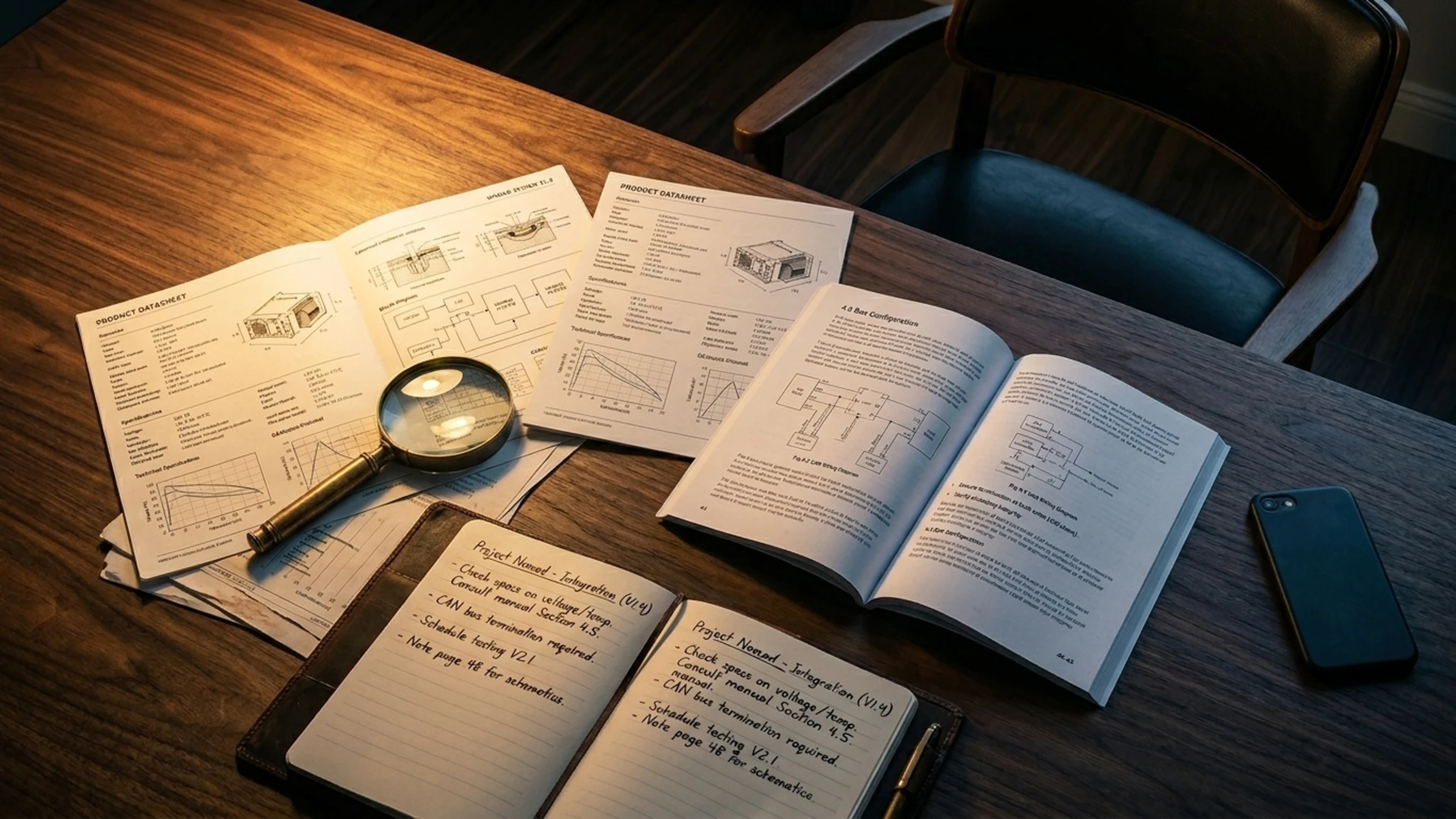
- —Technical datasheet and manuals in English
Not necessarily. A tariff classification covers a broad category and may have 3 to 8 NOMs attached to it, but not all of them apply to your specific product. NOMAD's technical analysis identifies which standards actually apply based on the product's real characteristics. When a standard doesn't apply, we document it formally so you can present the evidence to customs if needed.
Yes. Exemptions exist. If our technical analysis shows your product doesn't need a conformity certificate for a specific standard, we tell you, directly and in writing. We build long-term relationships on transparency — we don't manufacture work you don't need.
It's an official document issued by an accredited certification body that formally proves a NOM does not apply to your specific product, or documents an applicable exemption. You need it when Mexican customs requires legal backing to release cargo without a certificate, or when your product's characteristics fall outside a standard's scope. NOMAD runs the NOM Conformity Assessment as a standalone service.
Samples, customs release letters, and import logistics
Each standard sets its own sample quantity; there is no universal number. Basic electrical safety standards usually require 1 to 3 units. Telecommunications standards can require up to 6 because radio frequency testing runs under multiple conditions. NOMAD specifies the exact quantity in the quote, before you ship anything.
Through a Customs Release Letter, an official document that authorizes temporary entry of sample units into Mexico without tariff payment. NOMAD issues the Customs Release Letter as one of the first steps after the regulatory assessment is approved. Once testing concludes, samples are returned to you or disposed of according to your instructions.
Yes. We coordinate sample transport between testing labs and your facilities within Mexico City and nearby areas of the State of Mexico. For international shipments, we advise on packing and documentation so samples arrive in testable condition.
Which NOM applies to your product? By sector and equipment type
Our experience is concentrated in four sectors:
Most common products: power adapters, LED lighting, computing equipment, mobile phones, routers, IoT devices, and consumer electronics generally.
Yes. European (CE) and US (FCC, UL) certifications are not directly recognized by Mexican authorities. NOM certification is a separate process. That said, existing international test reports can reduce the scope of testing required in Mexico when test methods are equivalent, often cutting time and cost. NOMAD reviews case by case which prior documentation we can apply.
It's the official document issued by Mexico's Telecommunications Regulatory Commission (CRT, formerly IFT) for any equipment using radio spectrum or connecting to public telecommunications networks. Instead of separate certificates per standard, the CRT issues one consolidated certificate. It applies to modems, routers, mobile phones, Bluetooth and WiFi devices, GPS trackers, and any device with wireless connectivity. NOMAD runs CRT Homologation as part of our telecommunications service.
Certificate titularity determines who is legally responsible for the product before Mexican authorities. The ownership extension service is for clients who need to appear as certificate holder on an existing certificate, or who need a change of holder on active certificates. It's common in business acquisitions, distributor changes, and import-chain restructuring.
International clients: how we certify without you in Mexico
Yes. A large share of our portfolio is manufacturers and laboratories in China, Japan, Korea, and other Asian countries certifying products for the Mexican market. We work in English, with extended availability and processes adapted for time-zone differences. International laboratories that need guidance on Mexico's regulatory framework for their own clients can engage us directly.
Start with a free regulatory assessment. Send us the product's technical datasheet or manual. We handle the certification body communications, the lab coordination, and the process management from Mexico. You ship physical samples when needed, and we keep you informed at every stage. You never need to set foot in Mexico.
It depends on how many NOMs apply to your product, what tests are required, and which certification body is involved. We don't quote generic ranges; any number without knowing the product would be imprecise. The initial regulatory assessment is free and produces a quote based on your specific case, not an estimate. Send us your product details and we'll come back with a concrete proposal.
The initial regulatory assessment is free
Send us your product's technical datasheet and within 24–72 hours we'll tell you exactly which NOMs apply and what the estimated cost is.